
Seeing research come alive: Lina Mulhanga Muhate explores Zambart labs and University Teaching Hospital (UTH)
Strong health systems are built on strong research — and for Lina Mulhanga Muhate, an MSc fellow from Instituto Nacional de Saúde - Moçambique INS, witnessing research in action offered a powerful reminder of what is possible when infrastructure, collaboration, and innovation come together.
As part of the SOFAR Annual Meeting 2025 at Chaminuka Nature Reserve, fellows stepped beyond conference sessions to experience Zambia’s research ecosystem firsthand. Visits to Zambart and the University Teaching Hospital (UTH) provided valuable exposure for all participants, many of whom discovered research aligned with their own work. For Lina, whose research is lab-based, the experience was particularly meaningful.
First Impressions
“When I heard we were going to visit Zambart laboratory and University Teaching Hospital (UTH), I was very excited because I knew it would be a new and valuable experience,” Lina shared.
At the University Teaching Hospital , she was immediately struck by the infrastructure and thoughtful design.
“What amazed me the most at the UTH lab was the organization of the offices within the infrastructure — the layout was impressive, and I found it both pleasing and inspiring.”
Zambart’s laboratory environment left an equally strong impression.
“I appreciated how the laboratory is divided into different sections for specific procedures. What I liked the most was the molecular lab, which is access-controlled and follows a unidirectional workflow.”
The structured setup underscored the importance of precision, safety, and efficiency in advancing high-quality research.
Reflecting on Her Own Research
Lina’s academic focus is HPV sequencing, and observing molecular research at Zambart sparked both excitement and reflection.
“Since I intend to work on HPV sequencing, I was glad to hear that Zambart performs HPV genotyping. However, I was a bit disappointed to know that their sequencing is currently limited to HIV. Zambart could have had a great impact on my research if it also conducted HPV sequencing.”
Even so, the visit gave her a clearer understanding of how research capacity can shape scientific opportunities — and highlighted the importance of expanding sequencing capabilities across the region.
Meanwhile, other fellows engaged with projects closely connected to their own research areas, exchanging ideas with scientists and exploring potential collaborations that could strengthen regional knowledge networks.
Opening Doors to Collaboration
Beyond the laboratories, the visits created space for meaningful conversations and future partnerships.
“Interacting with other fellows and researchers broadened my perspective on future collaborations. As I have been seeking training in HPV sequencing, this meeting gave me the opportunity to share my challenges — and supervisors and coordinators kindly offered to help connect me with institutions that could support or collaborate on HPV sequencing.”
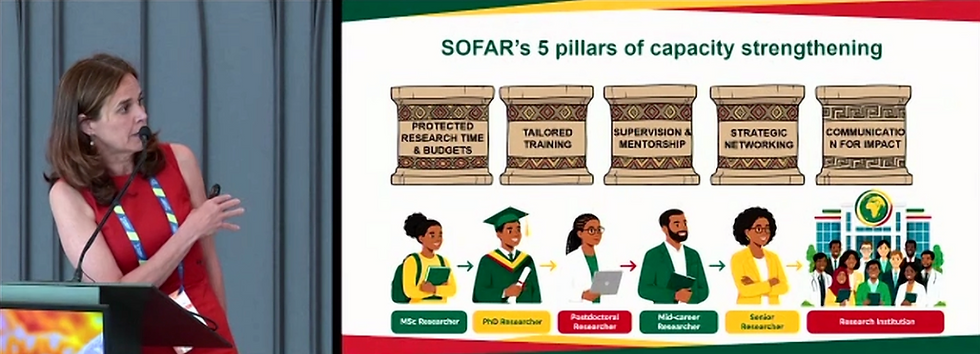
Such connections reflect SOFAR’s commitment to fostering a collaborative research environment where emerging scientists can access mentorship, resources, and cross-country expertise.
A Vision for the Future
For Lina, the highlight of the visit was the University Teaching Hospital — not only for what it represents today, but for what it could inspire elsewhere.
“My greatest inspiration came from visiting the UTH laboratory. It’s something we don’t yet have in Mozambique, and I believe adopting such a model would bring great benefits and advancements, especially as it stands for addressing public health challenges.”
Dr. Kwame Shanaube, Executive Director at Zambart and SOFAR Co-Lead, emphasized the lasting value of such exposure:
“When emerging researchers engage directly with institutions like Zambart and UTH, they begin to see where their work fits into the bigger story of African research — inspiration that stays with them for years to come.”
By the end of the day, Lina left Lusaka energized and forward-looking, with new ideas about how her research could connect to broader health systems and contribute to addressing pressing public health needs.


Comments