
SOFAR hosts Inaugural Annual Meeting in Zambia
The Southern Africa Research Capacity Network (SOFAR) held its inaugural Annual Meeting from 6–7 November 2025 at the scenic Chaminuka Nature Reserve near Lusaka, Zambia. The two-day event brought together 38 participants, including MSc, PhD, and Postdoctoral fellows, supervisors, mentors, and programme administrators from partner institutions across Southern Africa.
The meeting kicked off with warm welcoming remarks from Dr. Kwame Shanaube, Executive Director at Zambart and SOFAR Mentorship Co-Lead.
“Hosting this first meeting here in Zambia is special,” Dr. Shanaube said. “It’s a chance to show what collaboration looks like when researchers from different countries come together to strengthen science that serves our communities.”
Professor Katharina Kranzer, SOFAR’s Programme Director, highlighted the growing impact of the network.
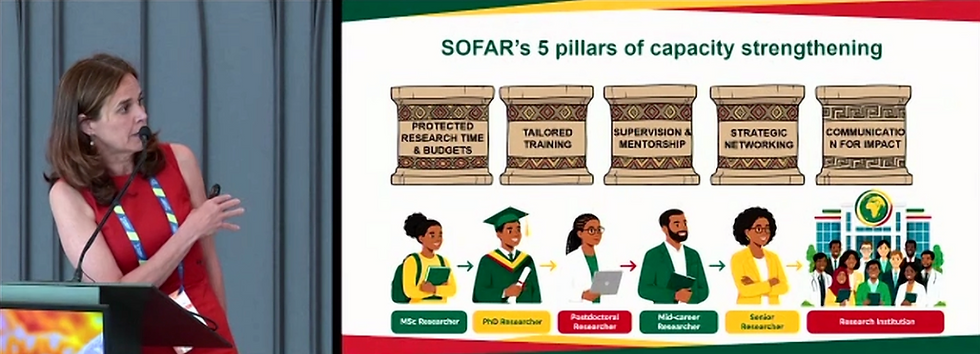
“SOFAR continues to show what’s possible when people work together across borders,” she said. “We are not just training researchers, we are nurturing a community of scientists who support one another and shape the future of health research in Africa.”
The first day featured engaging presentations from MSc and PhD fellows representing zambart (Zambia), BRTI (Zimbabwe), and INS (Mozambique). Each fellow shared their research, discussed challenges, and received feedback from mentors and peers, fostering a vibrant exchange of ideas.
JayJay Karumazondo, a PhD fellow from BRTI, described the experience as both challenging and inspiring
“The feedback pushed me to think deeper about my work — but what stood out most was the sense of belonging. You can feel that everyone here wants each other to succeed.”
In addition to presentations, the programme included supervisor training, a leadership dialogue on equitable partnerships, and a colourful Cultural Dinner celebrating the diversity of the SOFAR network.
Day two emphasized personal and professional development, with sessions on career pathways, community engagement, mental health, and safeguarding. Dr Musonda Simwinga, the Monitoring and Evaluation co-lead from underscored the broader purpose
“We want our fellows to grow into well-rounded researchers — people who lead with empathy, ethics, and confidence.”
Between sessions, participants explored the wildlife and open spaces of Chaminuka, creating lasting memories and forging stronger bonds across the network.
The successful inaugural meeting underscored SOFAR’s mission: not just to train the next generation of African health researchers, but to cultivate a thriving, supportive community of scientists working collaboratively to address the continent’s pressing health challenges.


Comments